 FRANK LLOYD WRIGHT:
 Arquitecto estadounidense, uno de los principales del siglo XX.
was born on June 8, 1867 in Richland Center (Wisconsin) and died on April 9, 1959 in Phoenix (Arizona).
rejected the neoclassical and Victorian styles. He was convinced that the shape of each building must be linked to its function, the environment and the materials used in its construction. The latter has always been one aspect where he showed greater skill.
In 1893 he opened his own architectural firm in Chicago.
Wright pioneered the use of new building techniques, such as prefabricated concrete blocks and innovations in the field of air conditioning, indirect lighting and heating panels.
Another of his fundamental contributions to modern architecture was the domain of the free plan, which won impressive spaces that flow from one room to another.
This concept is evident in so-called "Prairie" houses "(houses on the prairie), among which the Martin House in Buffalo (New York, 1904), the Coonley House in Riverside (Illinois, 1908) and Robie House in Chicago (1909).
The Larkin Building in Buffalo (New York) was the first office building to have air conditioning, double glazed windows, doors, windows and metal furniture.
Among his most emblematic works can be cited: the Millard House in Pasadena (California, 1923), the Kaufmann House, or Fallingwater house in Bear Run (Pennsylvania, 1937, now open to the public), the Johnson Wax Company Administration Building in Racine (Wisconsin, 1939), the First Unitarian Church in Madison (Wisconsin, 1947) and the Price Tower skyscraper in Bartlesville (Oklahoma, 1953).
Among his contributions also include his numerous writings, among which include An Autobiography (Autobiography, 1932, revised 1943), An Organic Architecture (Organic Architecture, 1939), and House Natural (Natural House, 1954).

German-born American architect, one of the most important masters of modern architecture and probably the greatest exponent of the twentieth century in the construction of steel and glass.
was born on March 27, 1886 in Aachen (Germany) and died on August 17, 1969 in Chicago.
In 1912 he opened his own studio in Berlin.
Mies's architecture is characterized by simplicity and sincerity essentialist expression of its structural elements. His work is characterized by rigidly geometrical composition and the total absence of ornamentation.
Its influence be summarized in one sentence that he gave, and has become the ideological paradigm of the modern movement architecture, "less is more."
the late 1920's undertook two of the most representative masterpieces: the German pavilion for the Barcelona Universal Exposition of 1929 (for which he also designed the famous Barcelona chair, chrome steel and leather) and the Tugendhat House ( 1930) in Brno (now Czech Republic).
built many buildings, among which the Lake Shore Drive Apartments (1948-1951) or the Crown Hall at IIT (1950-1956).
His most emblematic of this stage highlights the Seagram Building (1958), a skyscraper of 37 floors of glass and brass built in New York. Mies
made his American masterpiece, the Farnsworth House in Plano (next to the Fox River, Illinois, 1950), a small shelter that has become one of the residences studied (and most criticized) of twentieth century architecture .
was born on March 27, 1886 in Aachen (Germany) and died on August 17, 1969 in Chicago.
In 1912 he opened his own studio in Berlin.
Mies's architecture is characterized by simplicity and sincerity essentialist expression of its structural elements. His work is characterized by rigidly geometrical composition and the total absence of ornamentation.
Its influence be summarized in one sentence that he gave, and has become the ideological paradigm of the modern movement architecture, "less is more."
the late 1920's undertook two of the most representative masterpieces: the German pavilion for the Barcelona Universal Exposition of 1929 (for which he also designed the famous Barcelona chair, chrome steel and leather) and the Tugendhat House ( 1930) in Brno (now Czech Republic).
built many buildings, among which the Lake Shore Drive Apartments (1948-1951) or the Crown Hall at IIT (1950-1956).
His most emblematic of this stage highlights the Seagram Building (1958), a skyscraper of 37 floors of glass and brass built in New York. Mies
made his American masterpiece, the Farnsworth House in Plano (next to the Fox River, Illinois, 1950), a small shelter that has become one of the residences studied (and most criticized) of twentieth century architecture .
Walter Gropius:
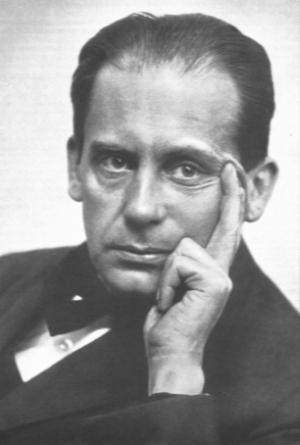
German architect and teacher, founder of the Bauhaus school of art capitalized research in architecture and applied arts the first half of the twentieth century. and one of the pioneers of modern design.
Born in Berlin on May 18, 1883 and died on July 5, 1969 in Boston.
The main hypotheses were the economy of expression and relevance to the means of production for all forms of design, a kind of mixture between art and engineering. Gropius designed a building characterized by an exquisite formal simplicity and the use of large areas of flat glass.
studied architecture at the universities of Munich and Berlin-Carlottenburg. Between 1907 and 1910 he worked in the studio of architect Peter Behrens.
After War I. World directed two art schools in Weimar, until changed in 1919, the new Staatliches Bauhaus.
In collaboration with Adolph Meyer designed the Fagus factory in Alfeld (1910-1911) and the office building of the Werkbund exhibition in Cologne (1914), which were released throughout Europe.
in 1946 created a group called the Architects Collaborative, which took over many large projects such as the Harvard Graduate Center (1949), the U.S. embassy in Athens (1960) and the University of Baghdad (1961). He also built the building of the Panama (1963) in New York, in collaboration with architect Pietro Beluschi italoestadounidense .
Le Corbusier
 :
: professional nickname of Charles Edouard Jeanneret, painter, architect and theorist Franco-Swiss, which is considered the most important figure in modern architecture.
was born on October 6, 1887 in La Chaux-de-Fonds (Switzerland) where he studied arts and crafts, and died on August 27, 1965 in Cap Martin (France).
One of his main contributions, apart from the rejection of historicist styles shared with other architects and theorists of the modern movement, is understanding of the house as a machine for living.
He defined architecture as the correct and magnificent play of volumes and light, based on the logical use of new materials and ideas have had an enormous impact on the planning of this century (XX).
In 1922 he associated in Paris with his cousin Pierre Jeanneret engineer and architecture adopted for the pseudonym Le Corbusier (the raven, adapted from the name of her great-grandmother Lecorbésier).
In 1920 he founded the magazine L Esprit Nouveau (The New Spirit), for which published numerous articles on architectural theories. Among
los edificios de esta época destacan el Pabellón del Esprit Nouveau en París (1925), la villa de Monzie en Garches (1927) y la villa Savoye en Poissy (1929-1931), el palacio de los Soviets en Moscú (1928). Sus obras posteriores más representativas son la Casa de Suiza de la ciudad universitaria de París (1931-1932), la Unidad de Habitación de Marsella (1947-1952) la iglesia de peregrinación de Notre Dame du Haut en Ronchamp (Francia, 1950-1954), el monasterio de los dominicos de La Tourette (1957-1960) y el planeamiento urbano de edificios de la Asamblea Chandigarh (1953-1961), el Secretariado (1958). Sus escritos más importantes se recogen en varios libros, entre los que destacan Vers une architecture (Towards an architecture, 1927), La maison des hommes (men's house, 1942) and Quand les Cathédrales étaient blanches (When the cathedrals were white, 1947).


0 comments:
Post a Comment